

Built for Utah Lawns. Backed by Soil Science.
At Spectrum Soil Solutions, we believe truly healthy lawns begin beneath the surface. While many lawn care programs focus only on surface treatments, our approach starts with understanding the soil ecosystem that supports your lawn, trees, and landscape plants.
By improving soil structure, strengthening root systems, and managing irrigation and plant health together, we help homeowners create landscapes that are healthier, more resilient, and better suited for Utah’s unique climate.
🌱 Rooted in Care — From Soil to Sprout

A Lifetime in the Landscape Industry-Built on Experience. Driven by Curiosity.
Spectrum Soil Solutions was built on more than 18 years of hands-on experience in lawn care, irrigation systems, and plant health management.
Our founder began working in the landscape industry at just 13 years old, helping his father maintain sprinkler systems and landscapes for customers across Northern Utah. His father owned and operated a successful landscaping business for more than 30 years, providing early exposure to irrigation design, plant selection, and landscape maintenance.
Working in the field from such a young age provided a unique opportunity to learn how landscapes function in Utah’s environment. It also created a fascination with how different plants perform in different soil conditions, how irrigation systems affect plant health, and how landscape design influences long-term growth.
Those early experiences developed a deep appreciation for the science behind plant growth and the importance of understanding the soil and water systems that support healthy landscapes.
Questioning Traditional Lawn Care
Later in his career, our founder gained experience working with large lawn care companies and helping manage large-scale lawn programs.
These programs often relied heavily on high-nitrogen fertilizer applications designed to produce rapid green color.
While nitrogen can create quick visual results, years of experience revealed that plants require a much broader balance of nutrients and soil conditions to develop strong root systems and long-term resilience.
Over time it became clear that excessive nitrogen-based programs could sometimes create unintended consequences such as:
• rapid top growth with shallow root systems
• increased susceptibility to insect infestations
• higher water demands during summer heat
• long-term depletion of soil health
These observations sparked a deeper interest in understanding how soil chemistry, root development, and plant physiology affect turf and landscape performance.
Through ongoing research, collaboration with horticulture professionals, and years of field experience, a different philosophy began to emerge.
That philosophy became the foundation for Spectrum Soil Solutions.
Why Utah Lawns Require a Different Approach
Landscapes in Utah face environmental conditions that differ significantly from many other regions of the country.
Research from the Utah State University Extension shows that many soils along the Wasatch Front are naturally alkaline, low in organic matter, and prone to compaction.
These soil characteristics can limit nutrient availability and make it difficult for plants to absorb important micronutrients.
Combined with Utah’s dry climate, irrigation restrictions, and extreme seasonal temperature changes, these conditions make lawn care more complex than simply applying fertilizer.
Many lawn care programs developed in other regions do not account for these conditions, which is why homeowners often struggle with recurring lawn problems.
At Spectrum Soil Solutions, our programs are designed specifically for Utah’s soil conditions and climate.

Our Soil-First Philosophy
Rather than focusing only on top growth, Spectrum Soil Solutions focuses on improving the soil ecosystem that supports plant health.
Healthy soil supports:
• deeper root development
• improved nutrient absorption
• better water infiltration
• stronger plant resilience against pests and stress
Our soil-first approach emphasizes:
• improving soil structure
• balancing macro and micronutrients
• supporting beneficial soil biology
• strengthening root systems
• improving moisture retention
When the soil ecosystem improves, plants become healthier naturally.
This approach allows lawns to grow thicker, use water more efficiently, and tolerate environmental stress more effectively.
At Spectrum Soil Solutions, our programs are designed specifically for Utah’s soil conditions and climate.
Irrigation & Mowing: The Most Overlooked Lawn Problem
One of the most common reasons lawn care programs fail has nothing to do with fertilizer or pest treatments.
It is poor irrigation performance.
Even the most advanced lawn care products cannot produce proper results if water is not reaching plants evenly or if the root zone is not receiving adequate moisture.
Many lawns experience problems caused by:
• broken or clogged sprinkler heads
• uneven irrigation coverage
• incorrect watering schedules
• soil compaction preventing water infiltration
These irrigation issues often cause lawns to struggle with nutrient deficiencies, pest pressure, and inconsistent growth.
Because irrigation plays such a critical role in plant health, Spectrum Soil Solutions also offers sprinkler repair and irrigation adjustments as part of our overall landscape care approach.
By improving irrigation coverage and efficiency, we help ensure that treatments can perform as intended.
Why Proper Mowing Matters
Proper mowing is one of the most overlooked parts of lawn health. Cutting the lawn too short, waiting too long between mowings, or removing too much of the blade at one time can create significant stress on the plant. When too much leaf tissue is removed, the lawn loses valuable photosynthetic surface, which can slow root growth, weaken recovery, and reduce stress tolerance.
At Spectrum Soil Solutions, we help homeowners understand that mowing is not just about keeping the lawn neat — it is a critical part of how the plant grows, uses water, and responds to treatment. Our team looks at mowing habits as part of the bigger picture, especially when lawns are struggling with thinning, discoloration, drought stress, or poor performance.
In general, we recommend following the one-third rule, mowing more frequently during active spring growth, and keeping cool-season lawns slightly taller during summer to protect the crown, support deeper roots, and improve heat tolerance.
Because the best lawns are not built by fertilizer alone — they are built by managing soil, water, roots, and mowing practices together.

Why Proper Watering Matters
One of the most common reasons lawns struggle in Utah has nothing to do with fertilizer or pest control — it is improper watering.
Utah’s dry climate, alkaline soils, and summer heat make irrigation management one of the most important factors in maintaining a healthy lawn. Research from the Utah State University Extension shows that watering practices directly influence root depth, drought tolerance, nutrient availability, and overall turf health.
At Spectrum Soil Solutions, we often find that lawn problems such as thinning turf, discoloration, pest pressure, and poor treatment response are actually related to watering habits or irrigation coverage issues.
Understanding how and when to water properly can dramatically improve the health and resilience of your lawn.
Key Watering Principles for Utah Lawns
Water Deeply and Infrequently
Instead of watering frequently for short periods, lawns should be watered deeply and less often. Deep watering encourages roots to grow deeper into the soil where moisture is more stable. Lawns with deeper root systems are generally more resilient during drought and summer heat.
Frequent shallow watering can lead to shallow root systems that dry out quickly and struggle during periods of stress.
Water During the Early Morning
The most efficient time to water lawns is usually early in the morning, when temperatures are cooler and winds are typically lighter.
Watering during the heat of the day can result in significant water loss through evaporation, while watering too late in the evening may allow turf to remain wet overnight, which can increase the potential for certain lawn diseases.
Morning irrigation allows the water to reach the root zone while minimizing evaporation loss.
Maintain Your Sprinkler System
Even well-designed watering schedules can fail if irrigation systems are not functioning properly.
Common sprinkler issues include:
• clogged or broken sprinkler heads
• uneven spray patterns
• poor irrigation coverage
• water hitting sidewalks or driveways instead of plants
Regular inspection and adjustment of irrigation systems helps ensure water is distributed evenly across the lawn.
Avoid Overwatering
More water does not always mean a healthier lawn.
Overwatering can reduce oxygen in the soil, weaken root systems, increase disease pressure, and make turf more susceptible to pests.
Adjust watering schedules based on seasonal conditions, soil type, and rainfall.
Learn How to Water Your Lawn the Right Way
Because watering is one of the most important factors affecting lawn health, we have created a complete Utah Lawn Watering Guide that explains:
• how often to water lawns in Utah
• how long irrigation zones should run
• how to test sprinkler coverage
• watering recommendations for trees and shrubs
• how soil type affects irrigation needs
➡ Read the Complete Watering Guide
The Full Spectrum Lawn Program
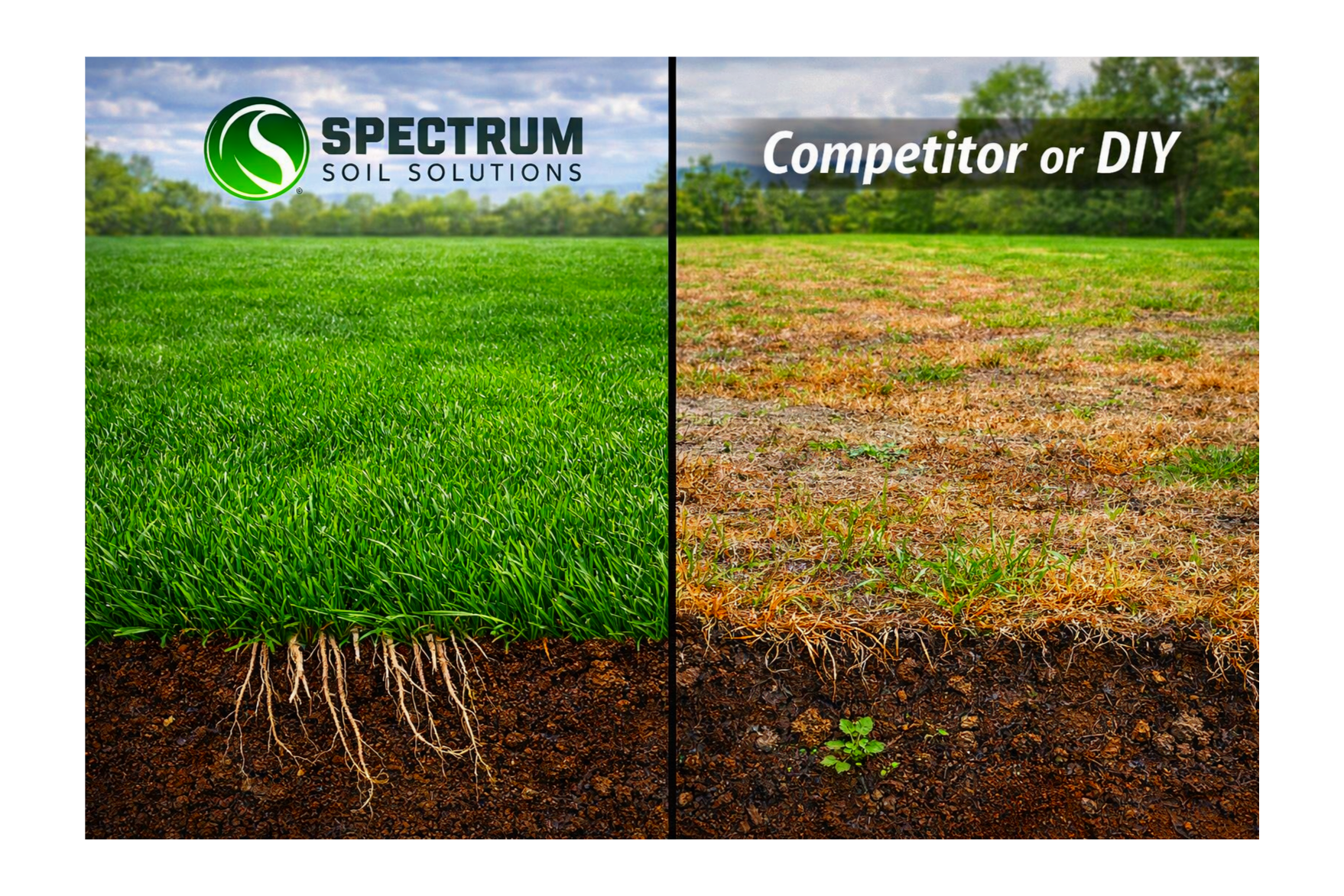
Our lawn care program provides complete seasonal support for soil health and plant growth.
Our lawn care program provides complete seasonal support for soil health and plant growth.
The program includes:
✔ Professional Soil Testing
✔ Customized Nutrient Plans
✔ Organic-Based Fertilizer Treatments
✔ Weed & Pest Management
✔ Core Aeration & Soil Conditioning
✔ Programs Designed Specifically for Utah Soil
Each treatment is designed to support the long-term health of the soil ecosystem, helping lawns perform better over time.
Integrated Pest Control & Plant Protection
Healthy landscapes must also be protected from damaging insects and pests.
At Spectrum Soil Solutions, our pest control programs focus on integrated pest management strategies designed to control pests effectively while reducing unnecessary chemical exposure.
Our approach combines:
• organic-based treatments when possible
• targeted pesticide applications when necessary
• pest monitoring and prevention strategies
• treatment rotation to reduce pest resistance
This balanced approach helps improve pest control effectiveness while protecting the long-term health of the landscape ecosystem.
A Complete Approach to Landscape Health
Spectrum Soil Solutions provides services designed to support the entire outdoor environment, including:
🌱 Lawn Fertilization Programs
🌱 Core Aeration & Liquid Aeration
🦟 Pest Control & Mosquito Treatments
🌳 Tree & Shrub Applications
💧 Sprinkler Repair & Irrigation Adjustments
🧪 Soil Testing & Lawn Evaluations
By addressing soil health, irrigation efficiency, plant nutrition, and pest pressure together, we help homeowners create landscapes that are healthier and more resilient.